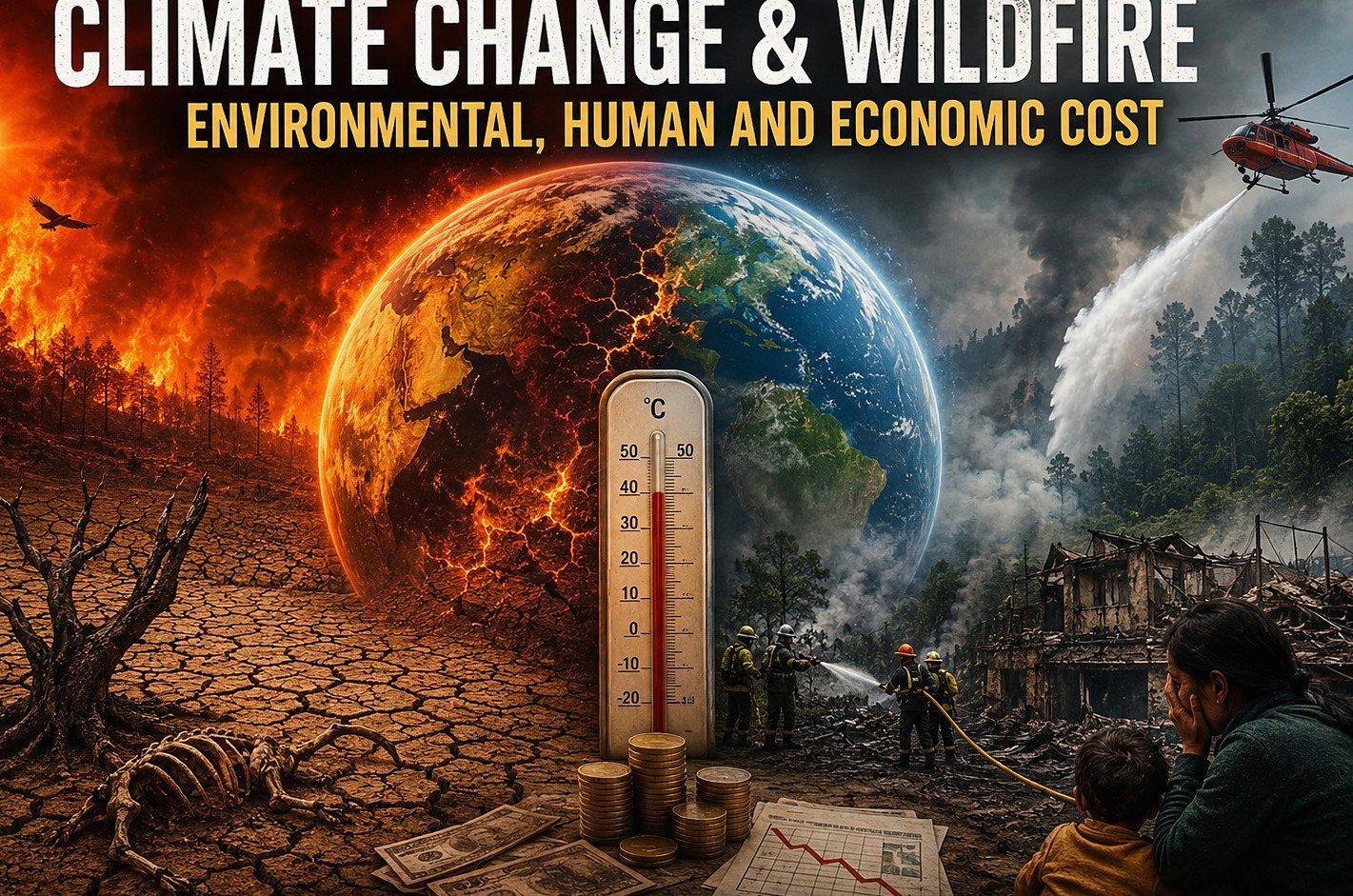
Wildfires Driven by Climate Change Carry Sweeping Environmental and Human Costs
Based on reporting by ddnews.gov.in
Scientists warn that major fires are currently burning across Asia, Africa, Australia and South America, driven by extreme heat and prolonged drought. In April this year, the Nilgiris district experienced its largest forest wildfires in recent years, with more than 5,000 acres affected. The blazes were eventually brought under control after nearly two weeks of sustained firefighting efforts.
A wildfire in Tamil Nadu's Nilgiris region, which burned through vast forest areas amid high temperatures and dry winds, has drawn renewed attention to the accelerating impacts of climate change across the Indian subcontinent, as scientists note that 2026 is already recording unprecedented wildfire activity globally.
Environmental damage and ecological disruption
Wildfires inflict severe and long-lasting environmental harm. The destruction of forests, grasslands and natural habitats leads to sharp declines in biodiversity, as animals are killed, injured or displaced. Fires also release large quantities of smoke, carbon monoxide and harmful particulate matter, generating dangerous air pollution that can spread across entire regions and countries.
Burning forests emit enormous amounts of carbon dioxide and other greenhouse gases, weakening the Earth's capacity to absorb carbon and thereby intensifying climate change. Extreme heat from fires destroys soil nutrients and microorganisms, reducing fertility and raising the risk of desertification. Ash, toxic chemicals and debris from burned land also contaminate rivers, lakes and groundwater, threatening drinking water supplies and harming aquatic ecosystems.
Public health and human consequences
Wildfires pose serious risks to both physical and mental health. Dense smoke and toxic pollutants trigger respiratory illnesses including breathing difficulties, asthma attacks and lung infections, with children, the elderly and those with pre-existing conditions most vulnerable. The fires typically coincide with periods of intense heat, raising the risk of dehydration, heat exhaustion and heatstroke among residents and firefighters alike.
Beyond physical harm, wildfires leave lasting psychological effects on affected communities. People who lose homes, livelihoods, belongings or loved ones frequently experience trauma, anxiety, depression and prolonged emotional stress, with large-scale displacement further compounding mental health difficulties.
Economic and social fallout
The economic costs of wildfires are substantial and often long-lasting. Fires destroy homes, roads, railways, power lines and public facilities, resulting in billions of dollars in losses and expensive reconstruction. Agriculture suffers heavily as crops, grazing fields, forests and livestock are destroyed, disrupting food production and supply chains and damaging farmers' livelihoods. Tourism also declines sharply when fires strike popular destinations, as smoke, environmental destruction and safety concerns deter visitors and hurt local businesses.
Emergency firefighting, evacuation, disaster relief, rehabilitation and infrastructure rebuilding place considerable financial pressure on governments, particularly in developing countries already contending with climate-related disasters and limited resources. On the social front, large-scale fires frequently force thousands of people to leave their homes, sometimes permanently, creating significant humanitarian and rehabilitation challenges. Forest-dependent communities, farmers and indigenous populations are especially hard-hit. Schools also close due to poor air quality, safety concerns or evacuation orders, disrupting children's education and creating long-term academic and psychological difficulties.
Climate scientists caution that repeated wildfires disrupt ecological balance by altering ecosystems, damaging habitats, affecting wildlife migration and disturbing food chains. Burned forests are also more susceptible to future fires, particularly when vegetation regrows unevenly. Large-scale wildfires can influence global weather systems by releasing heat and greenhouse gases that contribute to more intense heatwaves, prolonged droughts and other extreme weather events.
As global temperatures continue to rise, wildfires are increasingly viewed not as isolated natural disasters but as a major environmental and humanitarian crisis linked to climate change, deforestation and unsustainable land-use practices. Climate scientists expect the frequency and intensity of such fires to increase further. Addressing the challenge is described as requiring urgent climate action, sustainable land management, stronger disaster preparedness and coordinated global efforts, particularly given that many developing countries remain inadequately equipped to deal with fires of this scale.