Colorado's Shrinking Glaciers Offer a Window Into Global Warming
Based on reporting by MSU Denver RED
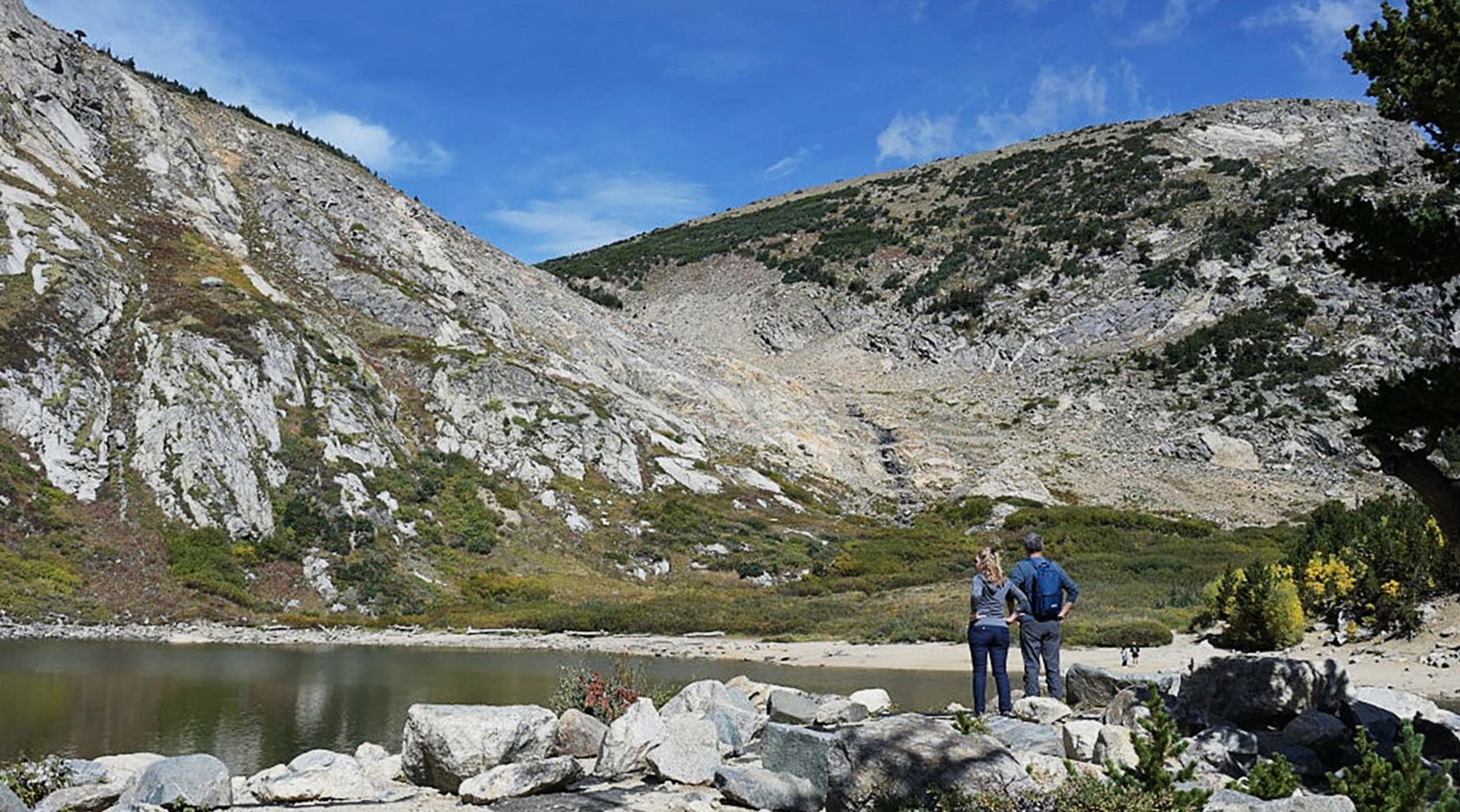
Climate change often advances too slowly to perceive in daily life, but Colorado's glaciers are proving an exception. St. Mary's Glacier — a year-round snowfield popular with campers and visitors, though not classified as a true glacier — disappeared this year for the first time in recorded history. The 13 remaining glaciers of northern Colorado are also retreating at a steep rate, providing an unusually clear, real-time measure of global warming's effects.
Colorado's glaciers are disappearing at a rapid pace, with St. Mary's Glacier — technically a year-round snowfield — melting entirely for the first time in recorded history as of September 2026.
"These glaciers are the canary in the coal mine," said Tom Bellinger, affiliate professor of Environmental Science in the Department of Earth and Atmospheric Sciences at Metropolitan State University of Denver. Because of their outlier status and limited size, he said, their year-on-year disappearance can be directly observed and measured.
A Global Crisis With Local Consequences
A major new international scientific report, led by the European Space Agency and incorporating NASA satellite technology, has found that Earth lost more than 12 trillion tons of ice from glaciers in polar regions over just the past 47 years. The study also shows that ice sheets have been melting at a significantly greater volume since the turn of the century, and particularly over the past 15 years — a pace that researchers say may be even faster than previously feared.
For Colorado, the consequences are concrete. Bellinger warned that the crisis will deprive cities and irrigation systems of water supplies they have depended on for centuries, while industries tied to glacier-fed valleys and rivers will also be affected. Rivers drying up earlier in summer will harm the state's fisheries and wildlife habitats, he said, and recreational businesses such as ski resorts — already under strain — will be hit further.
The glacier retreat compounds other pressures already bearing down on the state: a 27-year megadrought, an ongoing emergency water shortage on the Colorado River, and a record-low snowpack this year. "As things dry out in Colorado," Bellinger said, "we're seeing more extreme droughts and dust storms, which then impact further on the glaciers and compound the problem."
A Shrinking Timeline for Colorado's Ice
Bellinger has tracked the retreat of Colorado's glaciers for many years, but says the speed of decline in recent years has alarmed even him. He expects the smaller glaciers will be gone within 10 to 20 years, while the larger ones may survive another 40 years. By 2080, he said, most or all of Colorado's glaciers are forecast to have disappeared.
Following the release of the new report, one scientist lamented that humanity is now a "society smart enough to know the future, but not prudent enough to act upon the knowledge." Bellinger said he reluctantly concurs. "Unfortunately, my sense is that we will not act until we reach more of a crisis point — by which point it might be too little, too late," he said.
He noted that many countries, cities and industries around the world continue to rely on fossil fuels to drive growth rather than transitioning to renewable energy. Even an immediate halt to all fossil fuel use, he cautioned, would not stop further warming: "The effects from the damage we've already incurred would still continue to warm the planet for decades. That's baked in, literally."
Bellinger argues that stabilising or reversing the damage is urgent, since disruption to the water cycle will have widespread consequences. "These disappearing glaciers are a bright, flashing warning sign," he said, "and it's high time we all took notice."
Notable Colorado Glaciers at a Glance
Among the glaciers Bellinger highlights are Andrews Glacier in Rocky Mountain National Park, which sits in a cirque just below the summit of Otis Peak at under 12,000 feet and drains into a small lake; and Arapaho Glacier near Nederland, the largest in Colorado, which once supplied much of Boulder's water but has lost 52% of its mass over the past century. The site is closed to the public, though a nearby trail offers a view of the glacier against the city.
Also noted are Sprague Glacier in Rocky Mountain National Park — a cirque glacier on the east side of the Continental Divide that feeds several alpine lakes — and Isabelle Glacier in the Indian Peaks Wilderness, reachable via a scenic route passing lakes, wildflowers and rolling hills, with the glacier and surrounding peaks visible at 11,920 feet.