UK Shares Suppressed Climate Security Intelligence Report With Foreign Ministers
Based on reporting by The Guardian
Miliband addressed the gathering — described as the first such discussion among foreign ministers — drawing on a report by UK intelligence chiefs which concluded that the collapse of natural systems globally would trigger conflict, migration and food shortages. The meeting was attended by EU foreign ministers as well as those from Kenya and other nations.
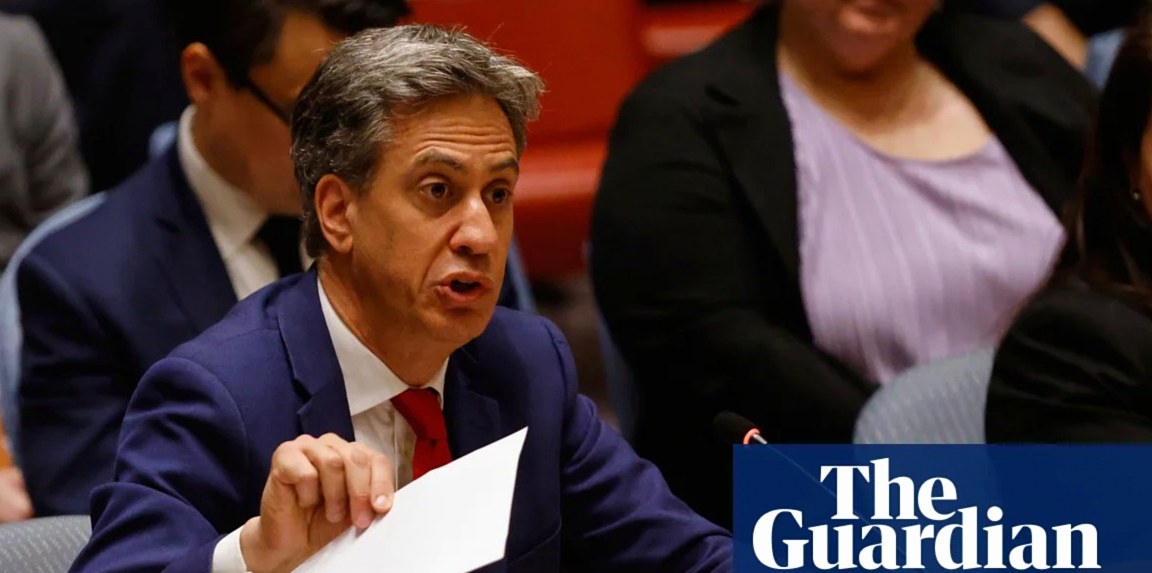
UK Foreign Secretary Ed Miliband presented findings from a previously suppressed intelligence report on climate and nature threats to national security at a private meeting of foreign ministers during the UN General Assembly in New York on Wednesday.
Miliband told the meeting that the approaching El Niño, described as having been intensified by climate breakdown, would place unprecedented strain on global food systems. "We face an El Niño that is already set to be the most intense in living memory," he said. "This will intensify climate shocks that compound and cascade across borders, threatening food and water security, displacing communities, putting pressure on markets and scarring economies."
He pointed to this year's heatwaves, poor harvests and rising food prices as indicators of the pressures governments would face, and said these matters had to be addressed at the highest levels of government. "Climate change and nature loss have never been issues for climate and environment ministers alone," he said. "They are defining challenges for our citizens, our economies, our foreign policy and our national security."
With the support of Prime Minister Andy Burnham, Miliband presented research finding that the degradation of ecosystems such as the Amazon and Congo rainforests — driven by climate change and the destruction of nature — carries national security implications worldwide.
Suppressed report and calls for transparency
The Joint Intelligence Committee (JIC) report had been due for publication last October but was blocked by Downing Street shortly before its planned release. A redacted version was subsequently released in January under the Freedom of Information Act, though ministers have continued to resist demands that the full report be made public.
Retired general and security expert Richard Nugee said governments must treat the climate in the same way they would other national security threats, such as sabotage by hostile states. "If a bridge is washed away, it has the same impact whether it's done by [a foreign power] or the climate," he told the Guardian. "The climate crisis will affect food security, energy security, water security, and lead to migration and potentially the recruitment of farmers to [terrorist organisations such as] Isis. Countries should absolutely be treating this as a national security issue." He added that it was not surprising the JIC report had been suppressed and redacted, describing publication of security reports as "very rare".
New appointments and funding announced
Miliband announced he would appoint a new special representative for climate security, along with a ministerial taskforce focused on "the national security and resilience risks of a changing climate and nature loss", to include military and security experts alongside climate scientists. He also announced £330 million for the Global Environment Facility, the main international fund for nature protection, to be directed at forests, oceans and other critical ecosystems in developing countries.
The private meeting followed a public speech Miliband gave on Monday at the UN General Assembly addressing the relationship between climate and national security. He had previously told the Guardian, shortly after taking office in July, that he intended to place the climate at the centre of UK foreign policy.
On Wednesday evening, Miliband said: "The countries fit for the future will be those that see climate and nature as intrinsic to economic and national security. Countries that anticipate risks and invest in resilience before crises hit. Countries that seize the incredible opportunities the clean energy transition presents. Countries that don't just see the connections but act on them."
Adrian Ramsay, Green Party MP for Waveney Valley and a campaigner for full publication of the JIC report, said it was welcome that the foreign secretary was sharing the report's findings with ministers from other governments. However, he questioned why members of parliament in the UK were still being denied access to the complete report, and why the government had not yet published its response to the report's findings.