Home · Economy & Cost of Living
US Workers Seek New Jobs to Escape Rising Gas Costs Amid Iran Tensions
Based on reporting by Fortune
Gas prices in the United States have climbed sharply in recent months. The national average for mid-grade gasoline now stands at just over $5 per gallon, while diesel has surpassed $6.50. A month ago, regular gas averaged around $4.10 per gallon, itself up from $3.15 a year earlier. The study was conducted as prices were approaching $4.50 on average.
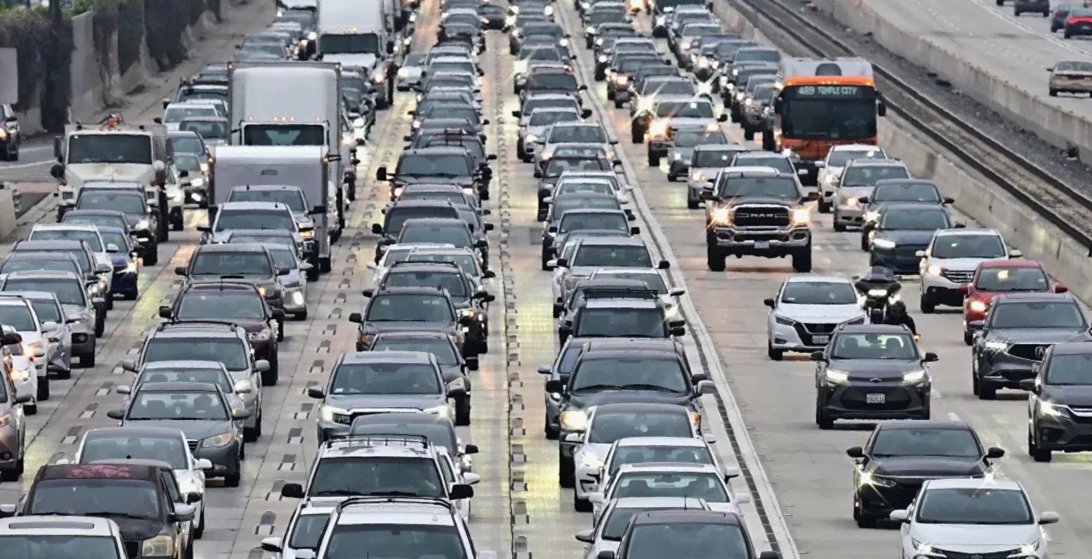
As U.S.-Iran tensions disrupt Middle East oil supplies and push gas prices sharply higher, a new study finds American workers are reconsidering job opportunities based on commuting costs, with many demanding higher pay or flexibility to travel farther.
Crude oil prices have been rising steadily throughout 2026, with Brent crude reaching $105 per barrel. The increase stems from supply disruptions tied to the Middle East conflict. Iran's position along the Strait of Hormuz — a critical waterway for oil exports from the Persian Gulf — has led ships to avoid the route, stalling supply and driving prices upward, despite President Trump's assertion that the strait is under U.S. control.
U.S.-Iran talks took place in New York this week, and analysts had anticipated some indication of when tensions might ease. Public optimism, however, has been limited. Iranian President Masoud Pezeshkian told the United Nations on Wednesday that Iran would never "bend the knee" while also signaling it was "ready for dialogue and diplomacy." President Trump, for his part, said he was weighing a choice between negotiating and "annihilating" the regime.
The cost of a commute
If elevated gas prices persist, employers seeking to fill positions may need to offer more to attract candidates willing to travel longer distances. When asked what it would take to commute an additional 20 minutes beyond their preferred travel time, 32% of employed Americans said they would require at least a 20% pay increase. A further 10% said a 10% pay rise would suffice, while 11% indicated a hybrid or more flexible work schedule would be enough to persuade them.
An additional 9% said they would make the longer commute if their gas costs were reimbursed in some form. However, 30% said no financial incentive or scheduling flexibility would convince them to travel farther than their current role demands.
The survey, which drew responses from more than 1,000 employed Americans, also highlighted the broader career impact of commuting. Nearly half — 49% — said commute costs or duration had led them to decline a job offer. Three-quarters of respondents said that the rising cost of living has made work-life balance more important to them.
Office attendance and the future of commuting
Mark Dixon, CEO of IWG, the world's largest workspace provider, has said commuting could be largely extinct within the next 15 years. He was previously quoted as saying: "In the future, you're going to explain to your kids that you used to commute," predicting they would regard it as "mad stuff" that employers once asked workers to "travel 100 miles to sit down and use a computer."
For now, office occupancy appears to have settled at a new baseline. Data from security provider Kastle Systems, which tracks occupancy across 10 major U.S. cities including New York, Washington D.C., Los Angeles, and Austin, shows that 53% occupancy has become the prevailing norm.