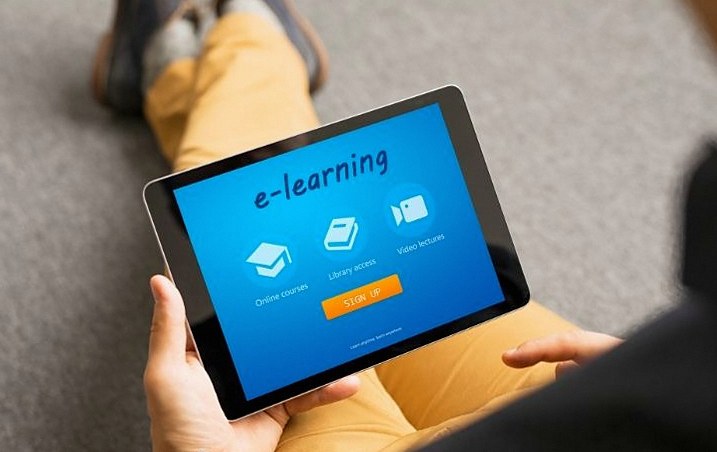
United Nations Offers Hundreds of Free Online Courses Across Multiple Topics
Based on reporting by Unric
The catalogue was first assembled in 2020, when more than half the world's population was under lockdown due to the COVID-19 outbreak and people were encouraged to use the period for self-study and skill development. Hundreds of courses are available through various UN agencies and bodies, spanning a wide range of disciplines.
The United Nations system maintains a broad catalogue of e-learning tools and online courses covering topics ranging from sustainable development and human rights to climate change and nuclear safety, open to learners worldwide.
Language, Development and Regional Platforms
The UN Speech Bank offers an e-learning tool designed to help students and candidates prepare for UN competitive examinations for language positions and global language register exams. The UN Department of Economic and Social Affairs (DESA) runs a Digital Learning Centre, a publicly accessible repository of digital capacity-building resources focused on implementing the 2030 Agenda.
The Economic Commission for Africa's African Institute for Economic Development and Planning operates the IDEP eLearning Platform, which assists African governments with training and capacity building in economic management and planning, working closely with African member states to assess needs and develop both general and specialised courses for senior and middle-level staff.
ECLAC, the Economic Commission for Latin America and the Caribbean, offers training as part of its technical cooperation with member countries. Beneficiaries typically include technical staff and decision-makers in public authorities, as well as academic experts and civil society representatives. The courses and workshops give participants the opportunity to share development experiences and strengthen professional skills in areas related to the Commission's work.
The Economic Commission for Asia and the Pacific (ESCAP) aims through its learning programmes to develop the technical, managerial and institutional capacities of member and associate member governments, with particular attention to least developed countries, landlocked developing countries and small island developing states. Its various sub-programmes offer e-learning courses, training programmes and online tools to help governments address development challenges and share technical knowledge in pursuit of the 2030 agenda.
The Economic and Social Commission for Western Asia (ESCWA) hosts an e-learning portal serving as a hub for learners wishing to expand their knowledge across disciplines relevant to regional development priorities. Courses cover issues including the 2030 Agenda, climate change, poverty, gender equality, urban development and public sector leadership. They are offered in both self-paced and facilitated formats, and learners can pursue individual courses or full learning paths leading to a professional certificate issued by ESCWA. Certificates are currently available on gender and on the Sustainable Development Goals.
Food, Agriculture and Human Rights
The Food and Agriculture Organization's elearning Academy provides multilingual courses for professionals in food and nutrition security, social and economic development, and sustainable natural resource management. Content is available free of charge in formats including self-paced e-learning, blended learning, MOOCs, technical webinars, online tutored courses, mobile learning, face-to-face workshops and university postgraduate programmes.
An e-learning tool focused on the Human Rights Council and its mechanisms is designed primarily for government officials from least developed countries and small island developing states, in line with the mandate of the relevant Trust Fund. It is described as interactive, accessible and gender-aware. UN field and headquarters staff, staff of regional and international organisations, NGO and civil society representatives, national human rights institution members and interns may also use the tool.
Nuclear, Agricultural and Labour Learning
The International Atomic Energy Agency (IAEA) offers a wide spectrum of education and training activities, including face-to-face courses and workshops, online learning, fellowship programmes and schools on nuclear-related topics. Its CyberLearning Platform for Network Education and Training (CLP4NET) provides online courses on nuclear safety and security, radiation protection, sustainable energy development and nuclear applications, among other subjects.
The International Fund for Agricultural Development (IFAD) provides e-learning courses on rural and agricultural development issues. The International Labour Organization offers e-learning tools on child labour designed to help users understand what child labour is and the key role ILO stakeholders can play.
The International Training Centre of the ILO (ITC-ILO) offers learning, knowledge-sharing and institutional capacity-building programmes for governments, workers' and employers' organisations and development partners, describing itself as a multicultural hub open to all regardless of gender, race or class. The ILO also operates the PROSPECTS Learning Portal, designed for policymakers, practitioners and key stakeholders in forced displacement contexts, providing actionable guidance across ten key interventions.