Home · Technology & Daily Life
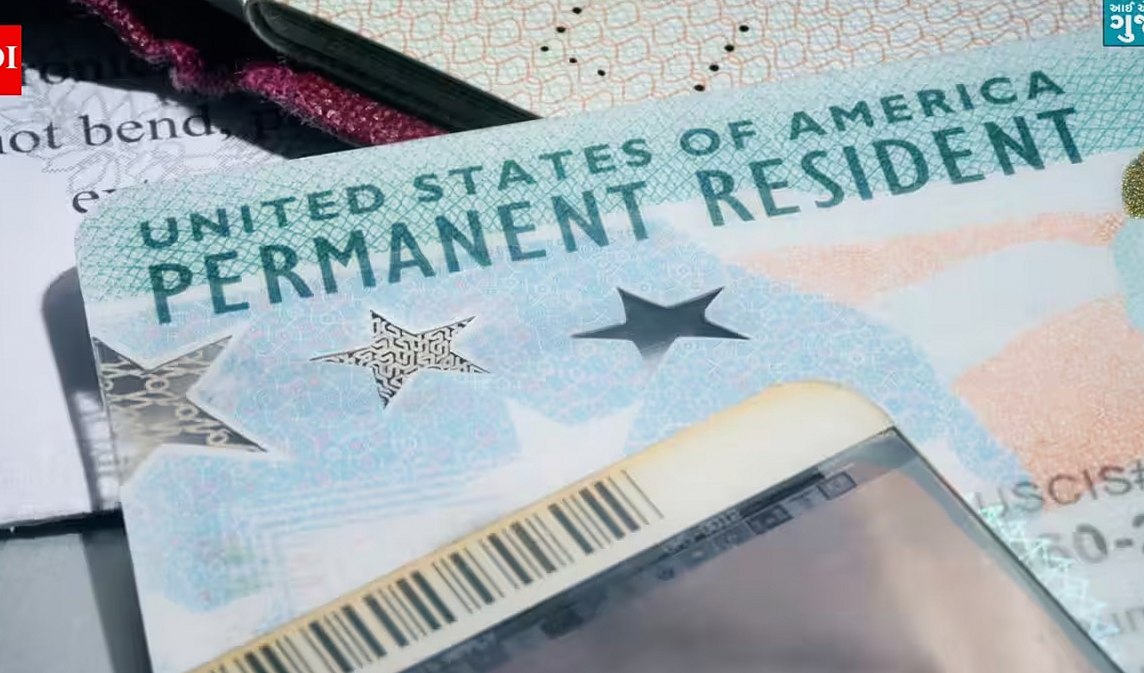
USCIS Rolls Out Updated Public Charge Green Card Rules From September 2026
Based on reporting by The Times of India
The updated guidance covers a broad range of applicants pursuing lawful permanent residence through adjustment of status. Those subject to public charge review include spouses, children, and parents of US citizens and lawful permanent residents, as well as other qualifying relatives; fiancé(e)s of US citizens; priority workers, professionals with advanced degrees, and individuals of exceptional ability; skilled workers, other professionals, and general workers under employment-based categories; investors; religious workers; and diversity visa immigrants. USCIS specifically clarified that children are not exempt from the public charge ground of inadmissibility.
US Citizenship and Immigration Services began applying new public charge inadmissibility guidance in September 2026, broadening financial independence requirements for most Green Card applicants while leaving humanitarian categories unaffected.
Categories exempt from the new rules
Humanitarian and special categories remain unaffected. Exempt groups include refugees and asylees, victims of trafficking (T visas) and qualifying criminal activity (U visas), special immigrant juveniles, VAWA survivors, Afghan and Iraqi interpreters or nationals employed by the US government, Cuban, Haitian, Nicaraguan, and Central American entrants, and certain diplomats, broadcasters, and applicants under special immigration laws.
Role of the I-864 Affidavit of Support
Form I-864, the Affidavit of Support, continues to factor into the process, though USCIS has made clear that submitting a qualifying I-864 on its own does not automatically establish that an applicant is admissible on public charge grounds. For family-based immigrants and certain employment-based immigrants, failing to file a sufficient I-864 can itself result in a public charge inadmissibility finding. Officers may also assess whether the listed sponsor is realistically able and willing to fulfil the financial commitment made.
USCIS also noted that certain individual circumstances — periods of unemployment, age, and disability — should not on their own trigger a negative public charge determination, particularly when an individual is otherwise healthy and willing and able to work.
Filing date determines which rules apply
The applicable ruleset depends on when an application was postmarked or submitted electronically, not when it is reviewed. Applications filed on or after September 18, 2026 fall under the new 2026 guidance, with its broader list of considered benefits. Those filed between December 23, 2022 and September 17, 2026 are governed by the narrower 2022 Final Rule and its more limited benefits list. Applications filed before December 23, 2022 remain under the original 1999 Interim Field Guidance.
This means the same underlying facts — for example, a green card holder's spouse who received SNAP benefits several years ago — could produce a different outcome depending solely on which filing window the application falls into, making the submission date a meaningful factor for applicants.
Where USCIS determines that an applicant is inadmissible solely on public charge grounds, the agency retains discretion to allow that individual to post a Public Charge Bond via Form I-945 as a financial guarantee rather than face an automatic denial. This option predates the current changes but remains part of the updated guidance going forward.